 +91-80471-54732
 sales@truetym.com
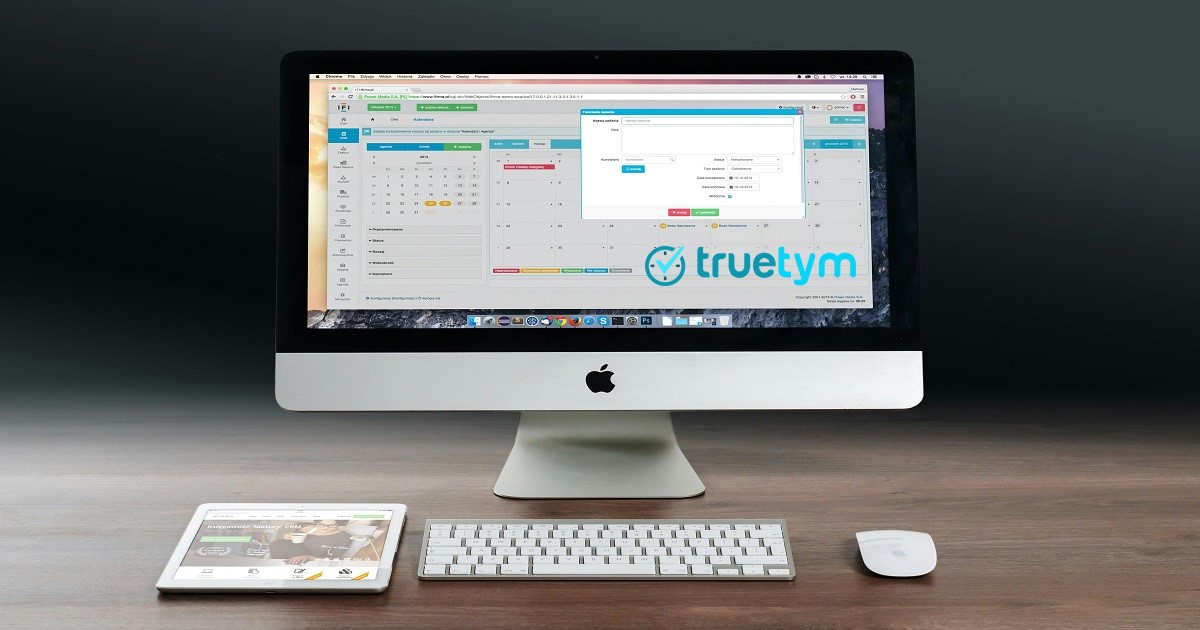
Attendance Management System - Best Practices
Recent Blogs

Formalisation on India’s Labor Market: A Comprehensive Analysis
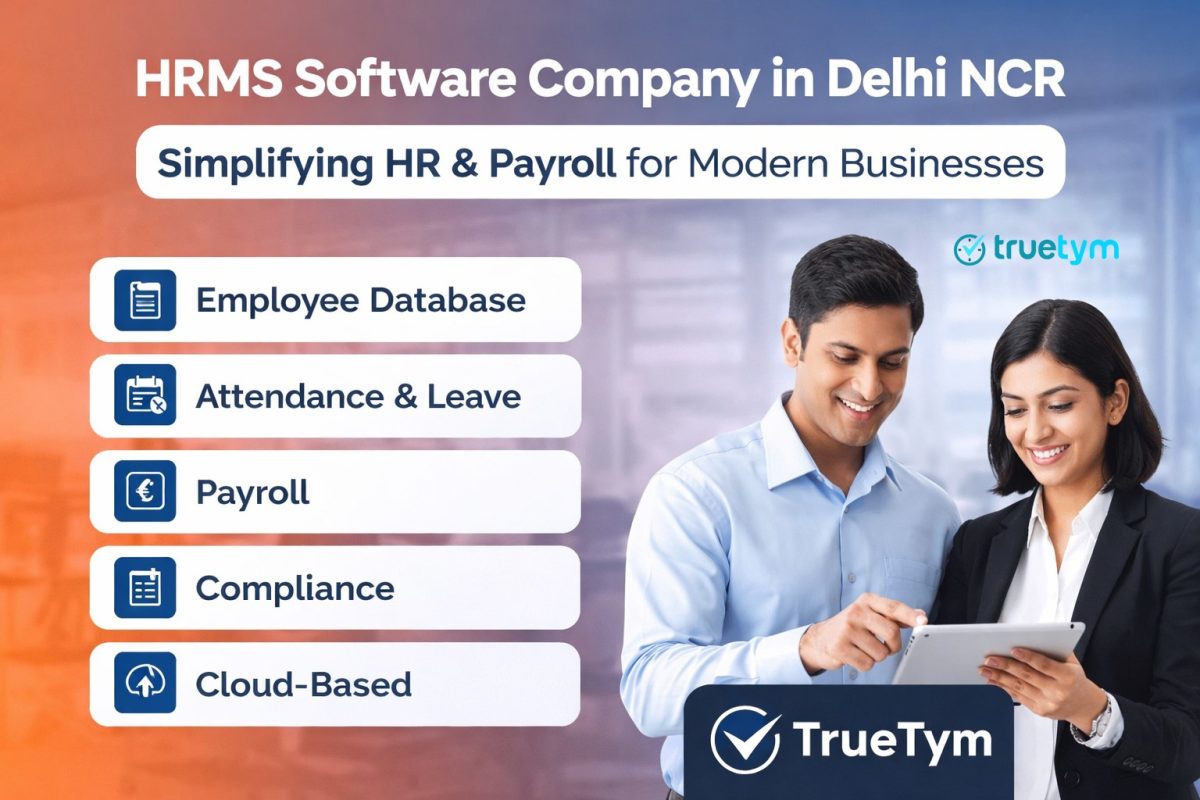
HRMS Software Company in Delhi NCR: Simplifying HR & Payroll for Modern Businesses
Top Workforce Solutions Redefining Efficiency in 2025-Powered by Innovation from Platforms like TrueTym
Effective time and attendance management is crucial for any organisation, as it ensures that employees are accurately compensated for the time they have worked. Efficient management of time commitment plays a critical role in employee satisfaction, thereby optimizing productivity and ensuring smooth operations for businesses.
Proper attendance management therefore becomes a must for field services companies. However, managing time and attendance can be challenging but with the help of a tracking tool you can monitor all these at one go.
Now, most businesses face challenges when it comes to time and attendance management, such as:
- Errors in attendance records
- Buddy punching
- Manual cross-checking of payment errors
- Data not compiled in one place
Today, there are several software solutions designed to manage employee time and attendance per business needs. Even small and mid-sized organizations have adopted solutions to manage attendance. In the case of field services, it becomes even more crucial to switch to automated attendance trackers due to the nature of the work they undertake in the field.
For instance, a construction business manager has many contractors, sub-contractors, and employees working across multiple job sites. To avoid underpayment or overpayment, he/she must have properly compiled attendance records in one place. Automated time and attendance apps do just that and moreover, they can be integrated with payroll software too.
It is likely that your business is also a victim of time theft as a report reveals that 75% of all US businesses are affected by it. Annually, it can cost employers a whopping $11 billion. A work-plus report of 2020 states that because of not tracking attendance and time, employers end up overpaying 200 billable hours annually. Time-tracking apps alone give insights only into the hours taken by employees to finish their tasks. When coupled with an employee attendance tracker, you can get a complete overview of every employee’s working hours, monthly/weekly reports, etc.
What is an Attendance Management System?
Attendance management is a set of activities and employee processes essential for time accounting, discipline, productivity, and statutory compliance. As we saw in the previous section, the attendance system consists of many parts. All of these subsystems need to function well for the whole system to work well. An administrator’s job is to set up and run each sub-system efficiently, day after day.
- Attendance management involves:
- Designing attendance policies
- Shift management and shift rostering
- Managing and operating attendance devices & registers
- Maintaining accurate time records
- Processing raw attendance data
- Managing and paying overtime
- Employee communications and alerts: sharing live attendance info every day as feedback to employees, informing about the shift roster, announcements, and so on.
- Monitoring attendance processes like attendance regularization and overtime approvals.
- Finalization of attendance and overtime within cut-off dates.
- Enforcing attendance policies by acting on violations.
- Preparing MIS reports and deriving insights.
- Monitoring absenteeism individually and collectively.
- Running an employee help desk for employee queries and support.
In this blog, we will walk you through some of the best practices you can adopt for attendance management. But first, let’s understand the benefits of having an automated attendance management system in place.
Benefits of Attendance Management System
Here points would be bold with a desirable font size
- Insights: If you need a record of a specific employee or group’s attendance, they will always be available to you in just a few clicks. Detailed records of work hours, absenteeism, overtime, and summary records are readily accessible to managers from any device. It allows them to further edit, adjust or compensate leaves, etc. with attendance data.
- Streamline workflow: Various HR tasks like payroll, performance assessment, etc. can be streamlined with the help of an integrated attendance management solution. It automatically sends notifications in cases of leaves or other requests, thereby minimizing the need to physically contact an employee or manager. Manual assigning of tasks or tracking shifts can be done with a few clicks.
- Enhanced productivity: In any organisation, low productivity becomes the biggest cause of reduced profitability. An average of 5 hours per day of manual entry results in a loss of 150 hours worth of work every month. With an automated system, manual tasks like updating work hours can be cut down to only a few minutes.
- Controlling costs: Attendance and cost may seem unrelated on the surface. But, problems like absenteeism, buddy punching, time theft, etc. tend to decrease the return on employees. Through time and attendance automation, it becomes impossible to tamper with the saved data or buddy punch. With fewer payroll errors, you will also save costs on overpayment or underpayment.
Mobile accessibility: In the field services industry, since employees may not always be present in one single place, cloud-based software allows remote access to data. Using the mobile application and their unique ID, employees can view their attendance records, check their schedules, etc.
With the monumental advantages of setting up an integrated employee attendance tracker, you should make the switch from manual to automated at the earliest. At the same time, to make the maximum of your investment into software, there are a few best practices to be followed. You will notice a measurable increment in your productivity and enhanced work culture by embracing the four best practices mentioned below for attendance management.